Indoor Cat Boredom Fix: 5 Easy Enrichment Ideas
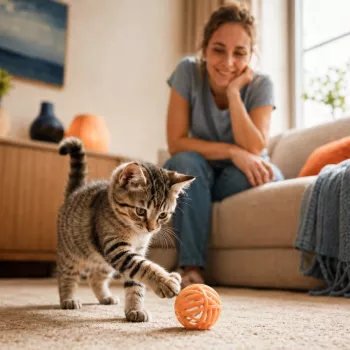
How to enrich a bored indoor cat?
A bored indoor cat usually isn’t “being difficult”—they’re missing the variety and challenge that outdoor life naturally provides. The goal is to add safe, satisfying outlets for hunting, climbing, scratching, and exploring, while rotating activities so they stay interesting.
1) Build a daily “hunt” routine with interactive play
Plan two short play sessions (about 5–10 minutes) that mimic the hunt cycle: stalk, chase, pounce, and “catch.” Use wand toys, small kickers, or anything that moves unpredictably. End by offering a small treat or part of a meal so the sequence feels complete and calming.
2) Add vertical territory (cats think in 3D)
Vertical space expands your cat’s world without adding floor clutter. Cat trees, sturdy wall shelves, and window perches let them climb, observe, and retreat when they want quiet. If you have multiple cats, vertical routes also reduce tension by providing “pass-by” lanes and separate resting zones.
3) Upgrade the environment with “micro-adventures”
Simple changes can feel brand-new: move a perch to a different window, set up a paper bag (handles removed), or create a temporary tunnel with a blanket over chairs. Rotate toys weekly—keeping only a few out at a time—so novelty stays high.
4) Make meals work for their brain
Swap one bowl feeding for puzzle feeders, treat balls, or scatter feeding (in safe, easy-to-clean spots). This turns eating into a problem-solving activity and channels natural foraging behaviors that boredom often replaces with yowling or mischief.
5) Support scratching, scent, and calm enrichment
Offer both vertical and horizontal scratchers near favorite hangouts. Add cat-safe plants like cat grass, and consider occasional catnip or silvervine to spark play. For sensitive cats, calming enrichment can be as simple as a cozy hideaway plus a predictable routine.
For more ideas and product-friendly setups, visit this complete guide on how to enrich a bored indoor cat.
FAQ
How do I know if my indoor cat is understimulated?
Common signs include attention-seeking meows, “random” zoomies, destructive scratching, over-grooming, or bothering people and other pets. A sudden behavior change can also signal stress or discomfort, so a vet check is wise if symptoms are new or intense.











Leave a comment